Tech
seo by highsoftware99.com Driving Digital Growth Today Now!!


Introduction
In today’s fast-moving digital environment, online visibility, brand trust, and long-term growth depend on how intelligently a business positions itself on the internet. Many brands struggle not because their products lack quality, but because their digital presence fails to communicate value in a clear and structured way. This is where seo by highsoftware99.com has carved a distinct reputation by focusing on sustainable digital growth rather than short-lived results. Instead of chasing trends, this approach emphasizes consistency, technical precision, and user-focused strategy, allowing businesses to build authority gradually while maintaining credibility.
What sets this service apart is its philosophy. It does not rely on shortcuts or artificial boosts. Instead, it focuses on strengthening a brand’s digital foundation so that growth feels natural, stable, and measurable over time. Businesses that adopt this model often notice not only improved online reach but also better audience engagement and stronger conversion patterns. The effectiveness lies in understanding how digital ecosystems behave and aligning brand presence with those behaviors in a practical, data-backed manner.
People Read this one also: cyanová
What Is seo by highsoftware99.com
seo by highsoftware99.com is a structured digital growth service designed to help businesses improve their online presence through strategic planning, technical refinement, and content alignment. Rather than functioning as a one-size-fits-all solution, it adapts to the specific needs of each business, taking into account industry dynamics, audience behavior, and competitive positioning. The service operates with a clear understanding that digital success is not accidental but the result of deliberate, well-executed actions over time.
At its core, this approach focuses on strengthening how a brand is discovered, perceived, and trusted online. It connects technical performance with human behavior, ensuring that digital platforms communicate value effectively to real users. By prioritizing clarity, relevance, and structural integrity, this service helps brands stand out in crowded digital spaces without compromising authenticity.
The Philosophy Behind Its Digital Strategy
The foundation of seo by highsoftware99.com lies in a philosophy that values long-term credibility over quick wins. Many digital services aim for immediate spikes in visibility, often at the cost of sustainability. In contrast, this approach emphasizes steady progress that compounds over time. It treats digital platforms as evolving ecosystems where consistency and quality matter more than aggressive tactics.
This philosophy recognizes that audiences are becoming increasingly selective. People trust brands that feel reliable, informative, and transparent. By aligning digital structures with user expectations, this service builds trust organically. The result is not just higher visibility but stronger brand perception and lasting audience loyalty.
Technical Precision and Structural Strength
One of the defining strengths of seo by highsoftware99.com is its focus on technical precision. A digital platform must function smoothly before it can perform effectively. Slow loading times, structural errors, and poor navigation can undermine even the best content. This service addresses such issues by refining the technical backbone of digital assets, ensuring that platforms operate efficiently across devices and environments.
Technical refinement is not treated as a one-time task but as an ongoing process. As digital standards evolve, continuous adjustments are made to maintain performance and reliability. This proactive approach minimizes disruptions and keeps platforms aligned with current best practices, allowing businesses to maintain a competitive edge.
Content Alignment and Audience Relevance
Content plays a central role in digital credibility, but only when it aligns with audience intent. seo by highsoftware99.com places strong emphasis on understanding what users are actually looking for and how they interact with information. Instead of producing generic material, the focus is on crafting content that answers real questions and addresses genuine needs.
This alignment improves engagement naturally. When users find content that resonates with their expectations, they stay longer, interact more, and develop trust in the brand. Over time, this trust translates into stronger relationships and improved conversion potential. The service treats content as a communication tool rather than a promotional gimmick.
Data-Driven Decision Making
Another critical element of seo by highsoftware99.com is its reliance on data rather than assumptions. Every decision is guided by measurable insights that reflect real user behavior. By analyzing patterns, trends, and performance metrics, the service continuously refines its strategies to ensure relevance and effectiveness.
Data-driven decision making allows for adaptability. When market dynamics shift or audience preferences change, strategies can be adjusted promptly. This flexibility ensures that businesses do not fall behind and remain aligned with evolving digital landscapes. The result is a responsive system that evolves alongside the brand.
Building Authority in Competitive Markets
Establishing authority online is particularly challenging in competitive industries. seo by highsoftware99.com addresses this challenge by focusing on credibility signals that matter to both users and digital platforms. Authority is built through consistent messaging, reliable information, and a strong technical framework that supports trust.
Rather than attempting to dominate instantly, this approach nurtures authority gradually. Over time, brands gain recognition as dependable sources within their niches. This steady rise in credibility often leads to increased opportunities, partnerships, and audience loyalty, all of which contribute to sustainable growth.
Adaptability Across Industries
One of the lesser-known strengths of seo by highsoftware99.com is its adaptability. Different industries have unique challenges, audiences, and competitive environments. This service does not rely on rigid templates but customizes its approach to suit each sector’s specific needs.
Whether working with emerging startups or established enterprises, the strategy remains flexible. It accounts for varying business goals, market maturity, and resource availability. This adaptability ensures that each client receives a tailored solution that aligns with their long-term vision rather than a generic plan.
Ethical Practices and Long-Term Stability
Ethics play a crucial role in the sustainability of digital growth. seo by highsoftware99.com follows practices that prioritize transparency and integrity. Instead of exploiting loopholes or engaging in risky tactics, it adheres to methods that support long-term stability.
This ethical approach protects businesses from sudden setbacks and reputational damage. It ensures that growth is built on solid foundations rather than fragile shortcuts. Clients benefit from peace of mind, knowing that their digital presence is secure and future-proof.
Measuring Success Beyond Numbers
While metrics are important, seo by highsoftware99.com understands that true success goes beyond numerical indicators. Engagement quality, brand perception, and user satisfaction are equally significant. By evaluating both quantitative and qualitative outcomes, the service provides a more comprehensive picture of progress.
This holistic measurement approach helps businesses understand the real impact of their digital efforts. It shifts the focus from vanity metrics to meaningful indicators that reflect genuine growth and audience connection.
Conclusion
In an increasingly complex digital world, sustainable growth requires more than surface-level tactics. seo by highsoftware99.com offers a refined, thoughtful approach that prioritizes technical strength, content relevance, and ethical practices. By focusing on long-term credibility rather than short-term gains, it helps businesses build a resilient digital presence that evolves with changing market dynamics.
This service stands out because it respects both data and human behavior. It bridges the gap between technical performance and audience trust, creating a balanced strategy that delivers lasting value. For businesses seeking stability, authority, and meaningful engagement, this approach provides a clear and dependable path forward.
FAQs
What makes seo by highsoftware99.com different from other digital services?
Its emphasis on long-term stability, ethical practices, and tailored strategies sets it apart from generic solutions focused on quick results.
Is seo by highsoftware99.com suitable for small businesses?
Yes, it adapts to different business sizes and focuses on scalable growth that aligns with available resources.
How long does it take to see meaningful results?
Results vary by industry and competition, but the approach prioritizes steady progress that compounds over time rather than instant spikes.
Does seo by highsoftware99.com rely on automation tools?
While tools are used for analysis, the strategy is guided by human insight and data interpretation rather than automation alone.
Can this service support long-term brand authority?
Yes, by focusing on credibility, consistency, and audience trust, it helps brands establish lasting authority in their niches.
Read More About Aiscoop.co.uk


Introduction
The financial services industry operates at the intersection of trust, regulation, and constant technological change. In such a complex environment, information is not just useful—it is critical. Over the past decade, one specific niche of content has quietly grown in importance: fsi blogs us. These blogs are not casual opinion pieces or surface-level commentary. They are specialized, insight-driven platforms where finance, security, compliance, and innovation converge.
What makes fsi blogs us particularly compelling is their ability to translate highly technical developments into actionable understanding. Whether it’s evolving cybersecurity threats, regulatory shifts, or operational risks within financial institutions, these blogs provide a layer of clarity that traditional reporting often lacks. They serve as a bridge between experts and practitioners, offering real-world interpretation rather than abstract theory.
As financial systems become more interconnected and exposed to risk, the role of informed commentary has expanded. This article explores the full scope of fsi blogs us, breaking down what they are, why they matter, and how they shape the broader financial ecosystem in the United States.
What Is fsi blogs us
fsi blogs us refers to a category of specialized online publications focused on the Financial Services Industry (FSI) within the United States. These blogs cover topics such as risk management, cybersecurity, regulatory compliance, fraud prevention, financial technology innovation, and operational resilience.
Unlike general finance blogs, fsi blogs us are written for a more informed audience. Their readers typically include banking professionals, compliance officers, cybersecurity experts, analysts, and policymakers. The content is deeply analytical, often rooted in real-world incidents, case studies, and evolving regulatory frameworks.
A defining feature of fsi blogs us is their credibility. Many are authored by industry insiders, consulting firms, or regulatory experts who bring firsthand experience. This gives the content a practical edge, making it useful not just for understanding trends but for making decisions.
Will You Check This Article: Tiffany Pesci: Inside the Private Life Behind Fame World Arc
The Evolution of fsi blogs us in the Financial Landscape
The rise of fsi blogs us did not happen overnight. It emerged as a response to growing complexity within financial systems. In the early 2000s, financial commentary was largely dominated by mainstream media and academic publications. However, as financial crises exposed systemic weaknesses, the demand for specialized, real-time analysis grew.
The 2008 financial crisis was a turning point. Institutions and professionals realized that traditional reporting often lagged behind reality. This gap created space for fsi blogs us to develop as a faster, more flexible source of insight.
Over time, the content evolved from simple commentary to in-depth analysis. Today, these blogs often break news, interpret regulatory updates, and even predict industry shifts before they become widely recognized. Their evolution mirrors the increasing need for agility in financial decision-making.
Why fsi blogs us Matter More Than Ever
The importance of fsi blogs us is tied directly to the complexity of modern finance. Financial institutions face a constant barrage of challenges, including cyber threats, regulatory scrutiny, and operational risks. In such an environment, having access to timely and accurate insights is not optional—it is essential.
One of the key strengths of fsi blogs us is their ability to contextualize information. Instead of presenting isolated facts, they connect the dots. For example, a cybersecurity breach is not just reported; it is analyzed in terms of its implications for compliance, customer trust, and systemic risk.
Another reason these blogs matter is their role in knowledge sharing. Financial institutions often operate in silos, but fsi blogs us create a shared space where ideas, lessons, and strategies can circulate. This collective intelligence helps the industry adapt more quickly to emerging threats.
Core Topics Covered in fsi blogs us
The content within fsi blogs us is diverse but focused. It revolves around key areas that define the financial services industry.
Cybersecurity is a dominant theme. As financial institutions become prime targets for cyberattacks, blogs provide detailed breakdowns of threats, vulnerabilities, and defense strategies. They often go beyond technical explanations, discussing the human and organizational factors that contribute to security failures.
Regulatory compliance is another major focus. The U.S. financial system is governed by a complex web of regulations, and staying compliant requires constant vigilance. fsi blogs us interpret these regulations, explaining not just what they mean but how they impact day-to-day operations.
Risk management is also central. From credit risk to operational risk, these blogs explore how institutions identify, assess, and mitigate potential threats. They often use real-world examples to illustrate how risk manifests and how it can be controlled.
Innovation is an emerging theme. As new technologies reshape finance, fsi blogs us examine their implications. This includes not just opportunities but also the risks associated with adopting new systems.
The Role of Experts Behind fsi blogs us
The credibility of fsi blogs us comes largely from the people who write them. These are not casual bloggers; they are professionals with deep expertise in finance, law, cybersecurity, and technology.
Many contributors have worked within financial institutions, regulatory bodies, or consulting firms. This experience allows them to write with authority and nuance. They understand the pressures, constraints, and realities of the industry.
What sets these experts apart is their ability to communicate complex ideas clearly. They do not oversimplify, but they also avoid unnecessary jargon. This balance makes fsi blogs us accessible without compromising depth.
Their insights often influence decision-making within organizations. In some cases, a well-argued blog post can shape how institutions approach risk or compliance.
How fsi blogs us Influence Industry Decisions
The impact of fsi blogs us extends beyond information sharing. These blogs actively influence how decisions are made within the financial sector.
Executives and managers often rely on these blogs to stay informed about emerging risks. A detailed analysis of a recent fraud case, for example, can prompt institutions to review their own controls. Similarly, commentary on regulatory changes can guide compliance strategies.
Another way fsi blogs us influence decisions is through thought leadership. By presenting new ideas or challenging existing assumptions, they encourage innovation. This is particularly important in an industry that can sometimes be resistant to change.
In many cases, these blogs act as an early warning system. They highlight issues before they become widespread problems, giving institutions a chance to respond proactively.
Challenges Facing fsi blogs us Today
Despite their value, fsi blogs us face several challenges. One of the biggest is maintaining credibility in an environment where information is abundant. With so many voices online, distinguishing reliable insights from speculation can be difficult.
Another challenge is keeping up with the pace of change. The financial industry evolves rapidly, and blogs must constantly update their content to remain relevant. This requires continuous research and a deep understanding of emerging trends.
There is also the issue of accessibility. While fsi blogs us are rich in information, they can sometimes be too technical for broader audiences. Striking the right balance between depth and readability remains an ongoing challenge.
Finally, there is the risk of bias. Since many blogs are affiliated with organizations, their perspectives may reflect specific interests. Readers must approach the content critically, evaluating the context in which it is written.
The Future of fsi blogs us in a Changing World
Looking ahead, the role of fsi blogs us is likely to expand. As financial systems become more interconnected, the need for specialized insights will only grow.
One area of growth is real-time analysis. Readers increasingly expect immediate interpretation of events, not just delayed commentary. This will push blogs to become more agile and responsive.
Another trend is the integration of multiple disciplines. Finance is no longer isolated from technology, law, and global politics. fsi blogs us will need to reflect this interconnected reality, offering more holistic perspectives.
There is also potential for greater collaboration. Blogs may evolve into platforms where multiple experts contribute, creating richer and more diverse content.
Ultimately, the future of fsi blogs us will depend on their ability to remain relevant, credible, and insightful in a rapidly changing environment.
Conclusion
The rise of fsi blogs us reflects a deeper shift in how knowledge is shared within the financial services industry. These blogs are not مجرد informational resources; they are critical tools for understanding a complex and constantly evolving landscape.
Their value lies in their depth, credibility, and ability to connect theory with practice. They help professionals navigate uncertainty, make informed decisions, and anticipate future challenges. In an industry where mistakes can have far-reaching consequences, this kind of insight is invaluable.
However, their effectiveness depends on both creators and readers. Writers must maintain high standards of accuracy and clarity, while readers must engage critically with the content. When this balance is achieved, fsi blogs us become more than just blogs—they become a cornerstone of informed financial practice.
FAQs
What does fsi blogs us focus on?
fsi blogs us focus on the Financial Services Industry in the United States, covering topics like cybersecurity, compliance, risk management, and financial innovation.
Who reads fsi blogs us?
The primary audience includes banking professionals, analysts, compliance officers, cybersecurity experts, and policymakers.
Why are fsi blogs us important?
They provide in-depth, practical insights that help professionals understand complex issues and make informed decisions.
Are fsi blogs us reliable sources of information?
Many are highly reliable because they are written by industry experts, but readers should always evaluate the context and potential bias.
How often should professionals follow fsi blogs us?
Regular reading is essential, as these blogs often provide timely updates and analysis that can impact real-world decisions.

Introduction
In a world that values speed without compromising efficiency, technologies that simplify everyday tasks often go unnoticed despite their profound impact. One such concept is microwey, a term increasingly associated with rapid heating methods, compact energy transfer, and modern convenience in food preparation and material processing. While many people casually link it to microwave-based systems, microwey extends beyond a simple kitchen appliance. It represents a broader approach to controlled electromagnetic heating that is shaping industries, households, and even scientific research.
Understanding microwey requires moving past surface-level familiarity. It is not just about warming leftovers in seconds. It involves physics, engineering precision, and a shift in how energy interacts with matter. From saving time in daily routines to influencing industrial production, microwey holds a deeper relevance than most people realize.
Will You Check This Article:RWU UAR: Hidden Meaning and Real Influence Explained
What Is microwey
Microwey refers to the use of microwave-frequency electromagnetic waves to generate heat within materials through molecular interaction. Unlike traditional heating methods that transfer heat from the outside inward, microwey works by exciting molecules, especially water molecules, causing them to vibrate and produce heat internally.
This internal heating mechanism is what makes microwey remarkably efficient. Instead of waiting for heat to penetrate layers of material, the energy is absorbed directly where it is needed. This results in faster heating, reduced energy waste, and often more uniform temperature distribution.
At its core, microwey operates within a frequency range typically around 2.45 GHz, which is carefully chosen to optimize interaction with common substances like water, fats, and sugars. This precise frequency ensures that heating is effective without causing unnecessary damage to materials or structures.
The Science Behind microwey Technology
To understand microwey properly, it is essential to look at how electromagnetic waves interact with matter. When microwey energy enters a substance, it creates an oscillating electric field. This field forces polar molecules, particularly water, to constantly realign themselves. The friction from this movement generates heat.
What makes microwey unique is that it bypasses conduction and convection as primary heating methods. Instead of relying on surface heat transfer, it directly energizes molecules throughout the material. This explains why a cup of water can heat quickly while a dry ceramic plate remains relatively cool.
However, this process is not perfectly uniform. Variations in material composition, density, and shape can lead to uneven heating. This is why certain foods heat inconsistently, a limitation that continues to drive improvements in microwey-based systems.
Everyday Applications of microwey
The most visible application of microwey is in food preparation, but its influence extends far beyond kitchens. In daily life, microwey simplifies cooking, reheating, and defrosting. It allows people to prepare meals quickly without extensive preparation or monitoring.
In industrial settings, microwey is used for drying materials, curing polymers, and even sterilizing medical equipment. Its ability to deliver targeted heat makes it valuable in processes where precision matters. For example, in the pharmaceutical industry, microwey helps in controlled chemical reactions where traditional heating methods might be too slow or inconsistent.
Another growing area is material science, where microwey is used to modify properties of substances. It can strengthen ceramics, improve composite materials, and accelerate chemical synthesis. These applications demonstrate that microwey is not just a convenience tool but a powerful technological approach.
Advantages That Set microwey Apart
The appeal of microwey lies in its efficiency and adaptability. One of its most significant advantages is speed. By generating heat internally, it drastically reduces the time required for heating compared to conventional methods.
Energy efficiency is another major benefit. Since microwey targets the material directly, less energy is wasted heating surrounding air or surfaces. This makes it a more sustainable option in many scenarios.
Microwey also offers a level of precision that traditional heating methods struggle to achieve. It can be controlled to deliver specific energy levels, making it suitable for delicate processes. In industries where consistency is critical, this precision becomes invaluable.
Moreover, microwey systems are often compact and require less infrastructure. This makes them accessible for both household use and specialized industrial environments.
Limitations and Misconceptions
Despite its advantages, microwey is not without limitations. One common issue is uneven heating, which occurs due to variations in material composition. This can lead to hot spots and cold areas, especially in complex structures.
Another limitation is penetration depth. Microwey energy does not always reach deep into dense materials, which can restrict its effectiveness in certain applications. This is why some items may appear heated on the outside while remaining cold inside.
There are also widespread misconceptions about microwey. Some people believe it alters the fundamental structure of food or makes it unsafe. In reality, microwey does not make food inherently harmful. It simply uses a different mechanism to generate heat. The key factors that affect food quality are time, temperature, and moisture, not the heating method itself.
Safety Considerations in microwey Usage
Safety is a crucial aspect of microwey technology. While it is generally safe when used correctly, improper usage can lead to problems. For example, using materials that reflect microwey energy, such as certain metals, can cause sparks or damage equipment.
Another concern is overheating. Because microwey heats quickly, it is easy to exceed safe temperature limits if not monitored properly. This is particularly important in industrial applications where precise control is necessary.
Modern microwey systems are designed with safety features such as shielding, automatic shut-off mechanisms, and controlled power output. These measures ensure that exposure to microwave radiation remains within safe limits.
microwey in Industrial and Scientific Innovation
Beyond everyday use, microwey is playing an increasingly important role in innovation. In manufacturing, it is used to speed up production processes while maintaining quality. For example, microwey-assisted curing of materials can significantly reduce processing time.
In environmental applications, microwey is being explored for waste treatment and recycling. It can break down complex materials and reduce harmful substances more efficiently than traditional methods.
Scientific research is also benefiting from microwey. It allows researchers to conduct experiments that require rapid and controlled heating. This has opened new possibilities in chemistry, biology, and materials science.
The adaptability of microwey makes it a valuable tool in solving modern challenges, from sustainability to advanced manufacturing.
The Future of microwey Technology
The future of microwey lies in refinement and expansion. Researchers are working to improve uniform heating, increase penetration depth, and enhance control systems. These advancements aim to overcome current limitations and unlock new applications.
One promising direction is the integration of microwey with smart systems. This could allow for real-time monitoring and automatic adjustments, ensuring optimal performance in both household and industrial settings.
There is also growing interest in combining microwey with other technologies. Hybrid systems that use multiple heating methods could provide greater flexibility and efficiency.
As energy efficiency becomes a global priority, microwey is likely to gain more attention. Its ability to reduce energy consumption while maintaining effectiveness positions it as a key technology for the future.
Conclusion
Microwey is far more than a convenient way to heat food quickly. It represents a sophisticated approach to energy transfer that is reshaping how heat is generated and applied across different fields. By directly interacting with molecules, microwey achieves a level of efficiency and speed that traditional methods cannot match.
While it has limitations, ongoing advancements are steadily addressing these challenges. From industrial innovation to everyday convenience, microwey continues to prove its value in both simple and complex applications.
Understanding microwey is not just about knowing how it works. It is about recognizing its potential and the role it will play in shaping future technologies. As research progresses and applications expand, microwey is set to become an even more integral part of modern life.
FAQs
1. What makes microwey different from traditional heating methods?
Microwey heats materials internally by exciting molecules, while traditional methods rely on external heat transfer through conduction or convection.
2. Is microwey safe for everyday use?
Yes, microwey is safe when used correctly. Modern systems include safety features that prevent harmful exposure and ensure controlled operation.
3. Why does microwey sometimes heat unevenly?
Uneven heating occurs due to differences in material composition, density, and shape, which affect how microwey energy is absorbed.
4. Can microwey be used outside of cooking?
Absolutely. Microwey is widely used in industries for drying, curing, sterilization, and scientific research.
5. What is the future potential of microwey technology?
The future includes smarter systems, improved efficiency, and expanded applications in manufacturing, environmental solutions, and advanced research.
Introduction
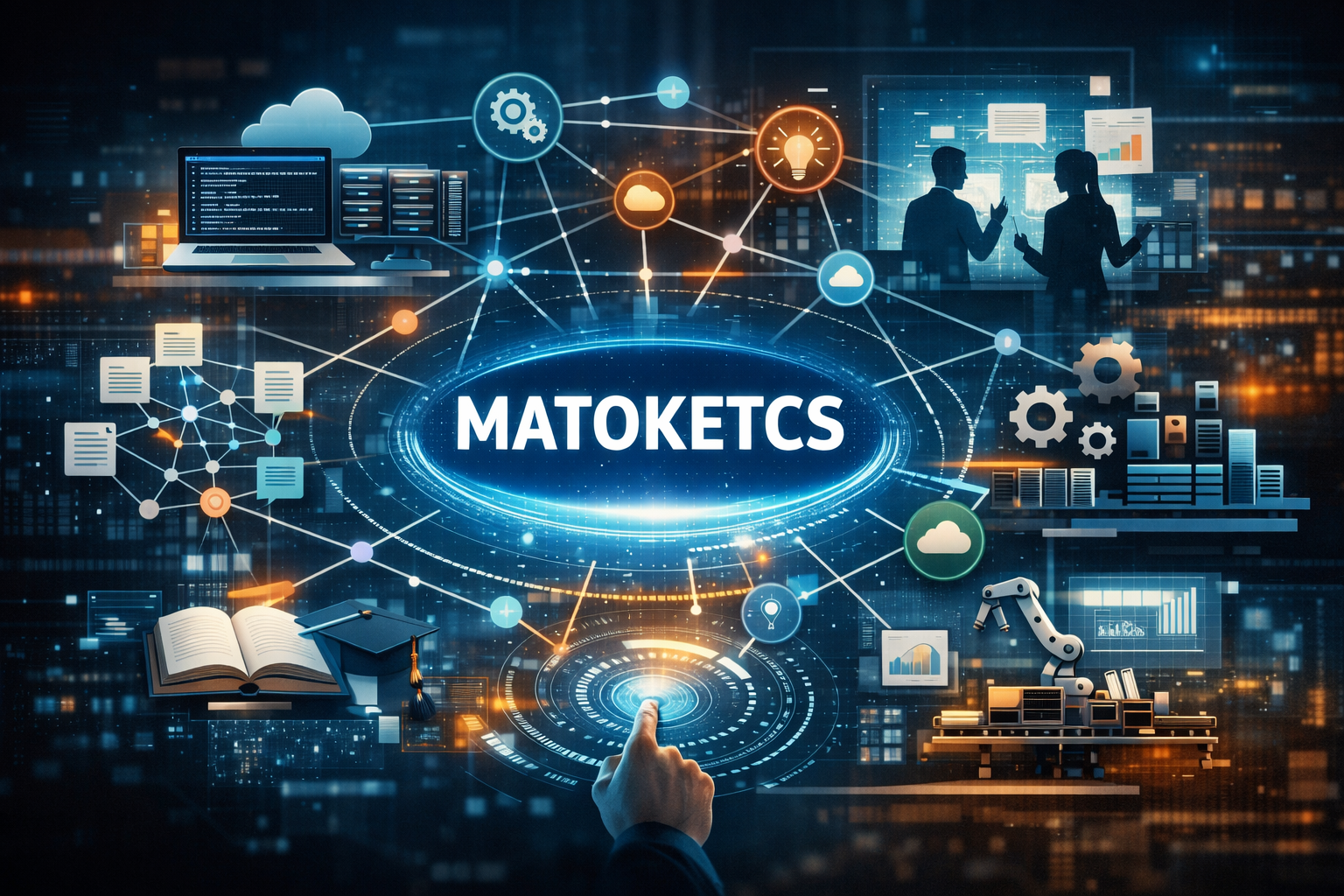
New ideas often appear quietly before they become widely understood. A term might surface in online discussions, technical articles, or innovation circles, gradually gaining attention as more people begin to explore what it means. One such term that has recently sparked curiosity across technology and innovation communities is matoketcs.
At first glance, matoketcs may appear mysterious or undefined. It is not a conventional concept listed in traditional dictionaries, nor does it belong to a single established discipline. Yet its growing presence in conversations about modern systems, collaboration, and structured thinking suggests that it represents something meaningful and timely.
The interest in matoketcs comes from its ability to capture an important shift in how complex systems are designed and managed today. Modern environments rarely operate in isolation. Tools interact with other tools, information flows across multiple channels, and decisions rely on interconnected processes. Matoketcs reflects a mindset that embraces these connections rather than attempting to simplify them artificially.
Understanding matoketcs requires looking beyond rigid definitions. Instead, it involves examining how this emerging concept helps people organize knowledge, align strategies with technology, and navigate increasingly complex systems. As industries continue evolving, matoketcs is becoming an intriguing lens through which modern workflows, innovation practices, and collaborative environments can be understood.
What Is Matoketcs
Matoketcs can be described as an emerging conceptual framework that focuses on connecting ideas, technologies, and operational strategies into a coherent system. Rather than representing a specific tool or platform, it reflects a structured way of thinking about how multiple elements interact within modern environments.
At its core, matoketcs emphasizes adaptability and integration. In traditional models, different systems often operate independently, with limited communication between them. Matoketcs challenges that separation by encouraging a broader perspective in which tools, workflows, and decision-making processes function as parts of an interconnected network.
One of the reasons matoketcs is gaining attention is its flexibility. The concept can apply across many fields, including technology development, organizational strategy, knowledge management, and collaborative innovation. Instead of forcing rigid structures onto complex problems, matoketcs promotes alignment between processes, people, and technological infrastructure.
Another defining feature of matoketcs is that it evolved organically through online discussions and experimental system thinking rather than being created by a single authority. Because of this, its meaning continues to develop as more individuals and organizations interpret and apply the concept in practical contexts. (bninetwork.com)
The Origins and Evolution of Matoketcs
The origins of matoketcs trace back to the early 2020s, when new conversations about system design, collaborative knowledge, and technological integration began gaining momentum across online communities. Unlike many established theories that emerge from academic institutions, matoketcs developed through informal experimentation and community-driven dialogue.
People exploring modern workflows noticed that conventional models often failed to capture the complexity of interconnected environments. Businesses used multiple platforms simultaneously, developers relied on diverse tools, and information flowed across many channels. These realities demanded a more adaptable approach to understanding systems.
Matoketcs gradually emerged as a term used to describe this evolving perspective. It served as a shorthand for a philosophy centered on integration, flexibility, and cross-domain collaboration. Over time, writers, technologists, and innovators began using the term to describe methods that align technological infrastructure with strategic goals.
What makes the evolution of matoketcs particularly interesting is that it continues to grow without a single controlling definition. Each new interpretation adds nuance to the concept, shaping how it is applied in different fields and industries.
The Core Principles Behind Matoketcs
To fully understand matoketcs, it is essential to explore the principles that guide its underlying philosophy. Although interpretations vary, several recurring ideas appear whenever the concept is discussed.
The first principle involves interconnected thinking. Matoketcs encourages people to view systems as networks rather than isolated components. Decisions in one area often influence outcomes in another, and recognizing these relationships leads to better strategic choices.
Another important principle is adaptability. Systems designed around matoketcs are not rigid structures. Instead, they allow for continuous adjustments as new information, technologies, or challenges arise. This flexibility helps organizations remain resilient in rapidly changing environments.
Clarity is also central to matoketcs. Complex systems can easily become confusing when information is scattered across different tools or processes. By organizing knowledge in structured yet flexible ways, matoketcs aims to improve transparency and understanding.
Finally, matoketcs values collaboration. Modern innovation rarely occurs in isolation. Teams, communities, and individuals often contribute different pieces of knowledge to a shared system. Matoketcs recognizes this collective intelligence and encourages environments where collaboration becomes a core strength.
How Matoketcs Supports Modern System Thinking
Modern systems are rarely simple. Businesses operate across global networks, software applications interact with numerous platforms, and data flows constantly between tools and users. Managing this complexity requires more than isolated solutions.
Matoketcs supports system thinking by focusing on relationships rather than individual components. Instead of analyzing each element separately, it examines how components interact and influence one another.
This perspective allows organizations to identify hidden patterns within their operations. For example, a delay in one workflow may originate from inefficiencies in a different department or technology layer. By mapping connections across systems, matoketcs helps reveal these dependencies.
Another advantage of this approach is improved decision-making. When leaders understand how different elements of a system interact, they can anticipate consequences more accurately. This holistic understanding reduces guesswork and supports more strategic planning.
Practical Applications of Matoketcs Across Industries
Although matoketcs is still evolving, it has already found practical applications in several industries. Technology development is one of the most obvious examples. Software teams often work with multiple frameworks, cloud platforms, and development pipelines. Applying matoketcs principles helps integrate these elements into cohesive workflows.
In business strategy, matoketcs provides a method for aligning operational goals with technological infrastructure. Instead of treating strategy and technology as separate domains, the concept encourages organizations to design them together.
Education also benefits from the ideas associated with matoketcs. Learning environments increasingly rely on interconnected resources, including collaborative platforms, interactive content, and community-driven discussions. By viewing these elements as parts of a unified system, educators can design more effective learning experiences.
Manufacturing and industrial sectors have also begun exploring matoketcs-inspired approaches. Integrating data from machines, supply chains, and operational systems allows organizations to identify inefficiencies and improve overall performance.
Why Matoketcs Is Gaining Attention Today
The growing interest in matoketcs reflects a broader shift in how people approach complexity. Traditional models often relied on linear thinking, where problems were broken into smaller isolated pieces. While this approach worked in simpler environments, it struggles to keep up with modern interconnected systems.
Matoketcs offers an alternative perspective that mirrors the realities of contemporary technology and collaboration. By acknowledging that systems are deeply interconnected, the concept aligns more closely with how modern organizations actually operate.
Another reason matoketcs is gaining attention is curiosity. Unique and unfamiliar terms often attract interest because they stand out from conventional terminology. Once people begin exploring the concept, they discover that it represents meaningful ideas about structure, adaptability, and integrated thinking.
The flexibility of matoketcs also contributes to its appeal. Because the concept is not restricted to a single field, it can be interpreted and applied in many different ways. This adaptability allows individuals from diverse backgrounds to find value in the idea.
The Future Potential of Matoketcs
The future of matoketcs remains open, but its potential is significant. Concepts that begin as flexible frameworks often evolve into widely recognized methodologies once their principles become widely adopted.
As organizations continue dealing with increasingly complex systems, the need for integrated approaches will only grow stronger. Matoketcs may eventually develop into a structured model used for designing workflows, managing knowledge, and coordinating collaborative innovation.
Another possibility is that matoketcs will evolve into a broader movement centered on system-based thinking. In this scenario, it could influence how people approach technology development, organizational design, and interdisciplinary problem-solving.
Regardless of its final form, matoketcs represents a powerful reminder that modern challenges rarely exist in isolation. Solutions often require understanding relationships, interactions, and shared systems rather than focusing solely on individual components.
Conclusion
Matoketcs is more than just a curious word appearing in online discussions. It represents an emerging perspective on how modern systems operate and how people can manage complexity more effectively. By emphasizing interconnected thinking, adaptability, and collaboration, the concept offers a fresh way to understand relationships between technology, knowledge, and strategy.
What makes matoketcs particularly interesting is its evolving nature. Because it was not created by a single institution or authority, its meaning continues to develop through collective interpretation. This openness allows the concept to adapt to new challenges and opportunities as they arise.
As industries, communities, and innovators continue exploring ways to manage complex environments, matoketcs may become an increasingly influential idea. Whether it ultimately evolves into a defined framework or remains a flexible philosophy, its emphasis on integration and system awareness reflects an important shift in modern thinking.
FAQs
1. What does matoketcs mean in simple terms?
Matoketcs refers to an emerging conceptual framework that focuses on connecting technologies, processes, and ideas into integrated systems rather than treating them as isolated components.
2. Is matoketcs a specific software or tool?
No, matoketcs is not a single tool or platform. It is better understood as a way of thinking about system organization, integration, and adaptability.
3. Why is matoketcs becoming popular?
The term is gaining attention because modern environments are increasingly interconnected, and matoketcs provides a framework for understanding and managing that complexity.
4. Can matoketcs be applied in different industries?
Yes. The principles associated with matoketcs can apply to technology development, business strategy, education, manufacturing, and other fields that rely on interconnected systems.
5. Will matoketcs become a widely recognized concept in the future?
It is possible. As discussions continue and more practical applications emerge, matoketcs may evolve into a more defined framework used in multiple industries.

fsi blogs us: Inside Global Finance Security Insights HubPro

Tiffany Pesci: Inside the Private Life Behind Fame World Arc

mila volovich Uncovering a Quiet Cultural Influence Today!

Shivon Zilis Net Worth Revealed — A Deep Dive into Her Financial Success

Discovering Claire Froggatt: A Journey of Passion, Purpose, and Success