Entertainment
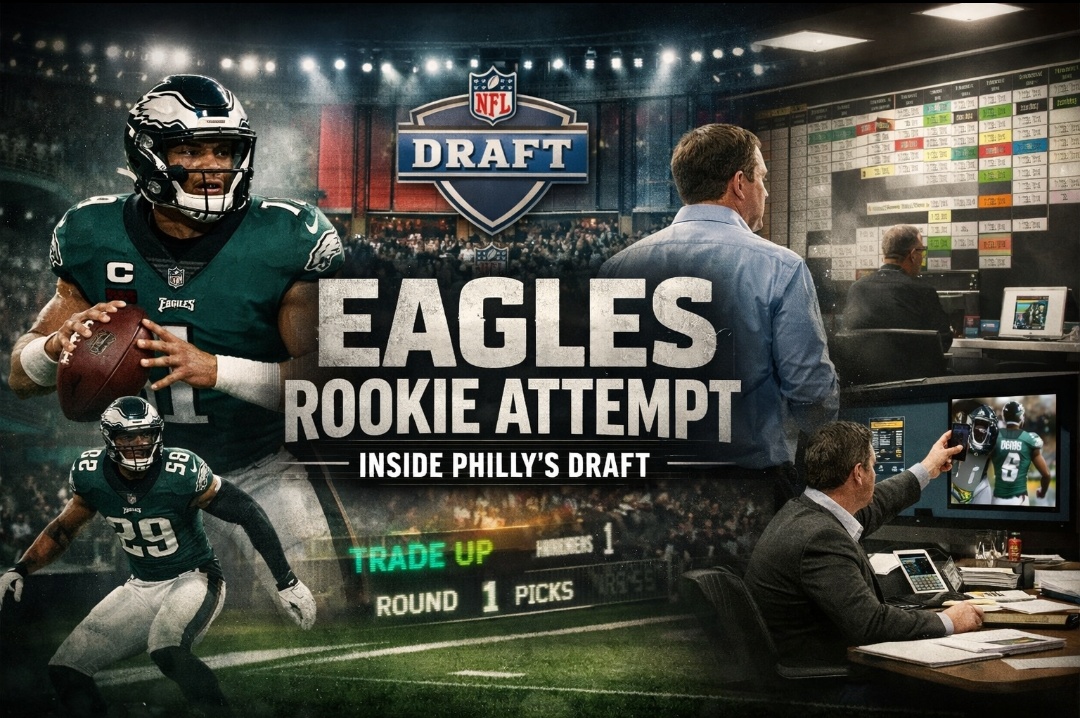
Inside the eagles rookie trade attempt shaping Philly’s draft

Introduction
The modern NFL is no longer built only on star veterans and blockbuster free-agent deals. Championships are increasingly shaped by decisions made on draft weekend, when front offices quietly maneuver behind the scenes to secure young talent before anyone else realizes their value. Few teams embody this philosophy more clearly than the Philadelphia Eagles. Known for their calculated aggression, the organization has repeatedly shown a willingness to move picks, players, and future assets in pursuit of long-term roster balance. In recent seasons, the spotlight has fallen on the eagles rookie trade attempt as a defining example of how the franchise blends patience with boldness.
This topic is not about a single impulsive move or a headline-grabbing gamble. Instead, it reflects a layered strategy involving scouting discipline, cap management, and an understanding of how rookies fit into a competitive timeline. The eagles rookie trade attempt represents a broader organizational mindset, one that values opportunity over comfort and projection over reputation. Understanding this approach requires stepping beyond surface-level rumors and exploring how such trade attempts are conceived, evaluated, and sometimes abandoned before the public ever hears a word.
People Read this one also: abs testauslösung
What Is eagles rookie trade attempt
What Is eagles rookie trade attempt is best explained as the Eagles’ proactive effort to reposition themselves during the draft or early rookie acquisition window in order to secure a specific young player they believe fits a critical need. This does not always mean trading up dramatically or sacrificing future first-round picks. In many cases, it involves subtle adjustments, such as swapping mid-round selections, leveraging surplus positions, or capitalizing on another team’s urgency.
The eagles rookie trade attempt is rooted in preparation. Months before the draft, the front office builds layered boards that anticipate where certain rookies might fall. When the actual draft unfolds differently than expected, the Eagles are often ready with contingency trade scenarios. These attempts are not reckless. They are calculated responses to unfolding circumstances, driven by a belief that certain rookies offer value beyond their projected slot.
Organizational Philosophy Behind Rookie Trades
To fully grasp why the eagles rookie trade attempt has become such a recurring theme, it is important to understand the Eagles’ organizational philosophy. The franchise has long believed that roster flexibility is as valuable as star power. By maintaining cap discipline and accumulating draft assets, the team creates room to act decisively when opportunity appears.
Unlike teams that draft strictly by need, the Eagles tend to draft by value, then solve positional issues through creative roster construction. Rookie trade attempts emerge naturally from this mindset. When a prospect graded significantly higher than others unexpectedly slides, the Eagles view inaction as a missed opportunity. This philosophy has allowed them to stay competitive across roster cycles without undergoing prolonged rebuilds.
Scouting Depth and Lesser-Known Evaluations
One of the lesser-discussed aspects of the eagles rookie trade attempt is the depth of their scouting operation. The Eagles invest heavily in cross-checking prospects, often assigning multiple evaluators to the same player at different stages of the college season. This results in a more nuanced understanding of a rookie’s adaptability, learning curve, and long-term ceiling.
Because of this depth, the team sometimes values players the league collectively underestimates. Trade attempts are often triggered not by public hype, but by internal conviction. When the Eagles attempt to move for a rookie, it is frequently because their internal grade diverges sharply from consensus opinion. This quiet confidence explains why some attempts never make headlines, yet still influence draft dynamics behind closed doors.
Risk Management and Draft Capital Balance
Every trade attempt carries risk, particularly when it involves rookies who have yet to play a professional snap. The eagles rookie trade attempt reflects a disciplined approach to risk management rather than blind optimism. The front office carefully models multiple outcomes, weighing the potential impact of a rookie against the cost of lost draft capital.
What makes this approach distinctive is the balance. The Eagles rarely mortgage their future for a single player. Instead, they prefer incremental gains that preserve flexibility. Even when a trade attempt fails, the preparation involved often benefits later rounds, as the team remains agile and ready to pivot when new opportunities arise.
Historical Context and Recent Patterns
While this article avoids biography-style breakdowns, historical context matters. Over the past decade, the Eagles have quietly established a pattern of engaging in rookie trade attempts that reflect changing league dynamics. As rookie contracts became more team-friendly under the current collective bargaining agreement, the value of securing impact players early in their careers increased dramatically.
Recent drafts have shown the Eagles targeting versatility, particularly in linemen and defensive backs who can contribute immediately while developing into long-term starters. The eagles rookie trade attempt fits neatly into this pattern, as it often focuses on prospects capable of filling multiple roles. This adaptability reduces the risk traditionally associated with moving assets for unproven players.
Impact on Locker Room and Team Culture
A less obvious consequence of the eagles rookie trade attempt is its effect on team culture. Aggressive but thoughtful roster moves send a clear message to veterans and young players alike: performance and potential matter more than draft position or tenure. This fosters a competitive environment where roles are earned rather than assumed.
For rookies acquired through trade attempts, the expectations are clear from day one. They are viewed as intentional investments, not developmental afterthoughts. This clarity can accelerate growth, as players understand precisely why the organization wanted them and what is expected in return.
Media Perception Versus Internal Reality
Public reaction to rookie trade attempts often swings between excitement and skepticism. Analysts tend to focus on the immediate cost, questioning whether a young player can justify the assets exchanged. Internally, however, the evaluation is far more granular. The eagles rookie trade attempt is assessed not just on immediate performance, but on how the rookie fits into a three-to-five-year roster plan.
This disconnect between media perception and internal reality explains why some trade attempts are misunderstood or prematurely judged. What appears risky in April may look prudent by November, once injuries, scheme adjustments, and development curves reshape the league landscape.
Long-Term Roster Implications
The true value of the eagles rookie trade attempt often becomes visible only over time. Successful attempts can stabilize key positions, reduce reliance on expensive veterans, and free financial resources for strategic extensions. Even unsuccessful attempts provide data, refining future decision-making and improving draft-day responsiveness.
By consistently engaging in these calculated maneuvers, the Eagles position themselves as a franchise that controls its destiny rather than reacting to it. This proactive stance has become a quiet competitive advantage in a league defined by parity.
Conclusion
The eagles rookie trade attempt is not a headline-seeking stunt or a reactionary gamble. It is the product of a deeply rooted philosophy that values preparation, adaptability, and long-term vision. Through disciplined scouting, balanced risk management, and a clear understanding of roster dynamics, the Eagles use rookie trade attempts as tools rather than crutches.
In an NFL where margins between success and failure are razor-thin, these subtle decisions often separate contenders from pretenders. Whether a specific attempt succeeds or fails, the process itself reflects an organization committed to thoughtful evolution. Over time, that commitment has helped the Eagles remain relevant, resilient, and ready to seize opportunity whenever it appears.
FAQs
What motivates the Eagles to attempt rookie trades?
The primary motivation is value. When the Eagles believe a rookie offers impact beyond their projected draft position, they explore trade options to secure that player.
Are rookie trade attempts common for the Eagles?
Yes, they are a recurring part of the team’s draft strategy, though many attempts remain private if they do not result in a completed deal.
Do these trade attempts involve high risk?
The risk is carefully managed. The Eagles typically avoid sacrificing future stability, favoring balanced moves that preserve flexibility.
How do these attempts affect team chemistry?
They reinforce a culture of accountability and competition, signaling that performance and potential drive roster decisions.
Can a failed trade attempt still benefit the team?
Absolutely. Even unsuccessful attempts improve preparedness, sharpen evaluations, and enhance the team’s ability to react effectively in later rounds.
Read More About Aiscoop.co.uk


Paul Waugh Lighthouse: A Deep Dive into the Man and the Movement

Adam Norris: The Visionary Behind Modern Mobility
Nadeshda Ponce: Bridging Art & Wellness with Purpose

Discovering Claire Froggatt: A Journey of Passion, Purpose, and Success

Shivon Zilis Net Worth Revealed — A Deep Dive into Her Financial Success

Andraya Carter Wife: Uncovering the Secrets of Her Journey and Achievements
-
Celebrity2 days ago
Paul Waugh Lighthouse: A Deep Dive into the Man and the Movement
-
Celebrity2 days ago
Adam Norris: The Visionary Behind Modern Mobility
-

 Celebrity2 days ago
Camille Vasquez Net Worth in 2026: Career, Income Sources & Lifestyle
-
Celebrity2 days ago
Nadeshda Ponce: Bridging Art & Wellness with Purpose
-

 Celebrity2 days ago
Sened Teame: The Inspiring Story Behind a Visionary Leader
-

 Celebrity1 week ago
Vivian Ridge: The Quiet Influence Behind an Iconic American Artist
-

 Celebrity1 week ago
Meredith Schwarz: A Resilient Life Beyond the Spotlight
-

 Celebrity1 week ago
Kate Connelly: Quiet Strength Behind a Public Culinary Life