
Business
Kwasi Kwarteng Net Worth: A Deep Dive into His Wealth, Career, and Financial Power


Introduction
Kwasi Kwarteng is not just another British politician with a respectable résumé. He is a high-profile figure whose rapid rise, dramatic fall, and financial standing continue to attract attention. People searching for kwasi kwarteng net worth are not just curious about numbers; they want to understand how power, policy decisions, and personal finances intersect. This article breaks down his earnings, assets, and income sources in plain English, without hype or political spin. If you expect billionaire-level wealth, reset your expectations now. His net worth reflects a professional political life, not elite corporate dominance. Understanding that distinction matters if you want a realistic picture rather than internet fantasy.
Who Is Kwasi Kwarteng?
Kwasi Kwarteng is a British Conservative Party politician known for his sharp intellect, classical education, and controversial time as Chancellor of the Exchequer. Born in 1975 to Ghanaian parents, he built his reputation through academic excellence before entering politics. He studied at Eton College and later at Cambridge University, where he earned a PhD in economic history. That academic background gave him credibility, but credentials alone do not translate into wealth. His public image combines elite education with ideological confidence, which helped him rise quickly. However, politics in the UK is not a fast track to massive personal riches, and his career reflects that reality clearly.
Kwasi Kwarteng’s Political Career and Income
Kwasi Kwarteng’s primary income source has always been politics. As a Member of Parliament, his base salary followed UK parliamentary standards, which are public and tightly regulated. When he served as Chancellor of the Exchequer in 2022, his salary increased, but not dramatically by global executive standards. Even at the top of UK government, pay remains modest compared to corporate leadership roles. This matters when estimating kwasi kwarteng net worth, because his income ceiling is structurally limited. Unlike politicians in countries with looser financial oversight, UK ministers face strict disclosure rules. His career brought influence and visibility, but not exponential wealth growth.
Estimated Kwasi Kwarteng Net Worth in 2025
As of 2025, estimates place kwasi kwarteng net worth between £1 million and £2 million. That range reflects cumulative earnings from his parliamentary salary, ministerial roles, book royalties, and possible investment income. This is comfortable wealth, not extreme affluence. Anyone claiming he is worth tens of millions is either misinformed or deliberately exaggerating. The figure aligns with long-term public service combined with intellectual side income. Importantly, his net worth has likely stagnated or declined slightly since leaving high office, due to reduced salary and reputational impact. Wealth preservation, not rapid accumulation, is now the more accurate financial narrative.
Book Deals, Writing, and Intellectual Income
Outside politics, Kwasi Kwarteng has earned money through writing and publishing. He co-authored and authored several books focused on British history, politics, and economics. These books enhance his authority and visibility, but they are not blockbuster sellers. Academic and political books typically generate steady but modest royalties. Still, this income stream adds diversification to kwasi kwarteng net worth. More importantly, it reinforces his positioning as a serious thinker rather than a career opportunist. If he continues writing or transitions into speaking engagements, this intellectual capital could become a more significant revenue source over time.
Investments, Assets, and Property Holdings
Kwasi Kwarteng is not known for flashy assets or aggressive investing. Public disclosures suggest standard holdings: pension contributions, savings, and possibly residential property. UK politicians are required to declare financial interests, which limits hidden wealth accumulation. There is no evidence of offshore accounts, speculative trading, or large private equity involvement. This conservative financial profile supports the estimated kwasi kwarteng net worth range. In simple terms, his money works slowly and safely, not aggressively. That may sound boring, but it aligns with both legal constraints and his public ideological stance on fiscal responsibility.
Controversies and Their Financial Impact
The 2022 mini-budget crisis severely damaged Kwasi Kwarteng’s political standing. While controversy does not directly erase existing wealth, it affects future earning potential. Speaking fees, advisory roles, and board opportunities often depend on reputation. His abrupt dismissal as Chancellor limited post-office financial upside. This is a key factor people overlook when discussing kwasi kwarteng net worth. Political missteps have real financial consequences, especially in reputational economies like consulting and publishing. Anyone assuming his wealth surged after office is ignoring how credibility drives long-term income opportunities.
Comparison with Other UK Politicians
Compared to peers, Kwasi Kwarteng’s wealth is average. He is not among the richest UK politicians, nor is he financially struggling. Figures like Rishi Sunak or former prime ministers with private-sector backgrounds operate on a different financial scale entirely. This comparison matters because it contextualizes kwasi kwarteng net worth realistically. His wealth comes from public service and intellectual labor, not hedge funds or inherited capital. If you’re measuring success purely by net worth, he does not rank at the top. If you measure influence and visibility, the picture changes—but money and power are not the same thing.
Future Earning Potential and Financial Outlook
Looking ahead, Kwasi Kwarteng’s financial future depends on reinvention. If he rebuilds credibility through writing, policy research, or international speaking, his income could stabilize or grow modestly. If he fades from public relevance, earnings will likely plateau. There is no realistic path to explosive wealth unless he pivots fully into private-sector advisory work. Therefore, future kwasi kwarteng net worth projections should remain conservative. Expect stability, not spectacular growth. That’s the honest assessment, not the clickbait version.
Conclusion
Kwasi Kwarteng’s financial story is far more grounded than online speculation suggests. His net worth reflects a long career in public service, supported by intellectual work and modest investments. The current estimates for kwasi kwarteng net worth show comfort, not excess. Understanding this helps separate political mythology from financial reality. If you’re looking for lessons, here’s the blunt takeaway: elite education and high office do not guarantee massive wealth. In the UK system, power brings responsibility and scrutiny, not unchecked financial gain. That reality defines his financial legacy more than any headline ever will.
Frequently Asked Questions (FAQs)
1. What is Kwasi Kwarteng’s net worth in 2025?
Kwasi Kwarteng’s net worth in 2025 is estimated between £1 million and £2 million. This includes political salaries, book royalties, pensions, and standard investments. It does not indicate extreme wealth or billionaire status.
2. How did Kwasi Kwarteng make his money?
He made his money primarily through his salary as an MP and cabinet minister, supplemented by income from publishing books and academic work. There is no evidence of major business ventures or corporate windfalls.
3. Did serving as Chancellor make him rich?
No. While the Chancellor role paid more than a standard MP salary, it was short-lived and tightly regulated. The position increased visibility, not long-term wealth.
4. Does Kwasi Kwarteng own significant property or assets?
Public disclosures suggest standard property and pension holdings, not large-scale real estate portfolios or luxury assets. His financial profile is relatively conservative.
5. Can Kwasi Kwarteng’s net worth grow in the future?
Yes, but only modestly. Future growth depends on writing, speaking, or advisory roles. Without a major private-sector pivot, dramatic wealth increases are unlikely.
Introduction
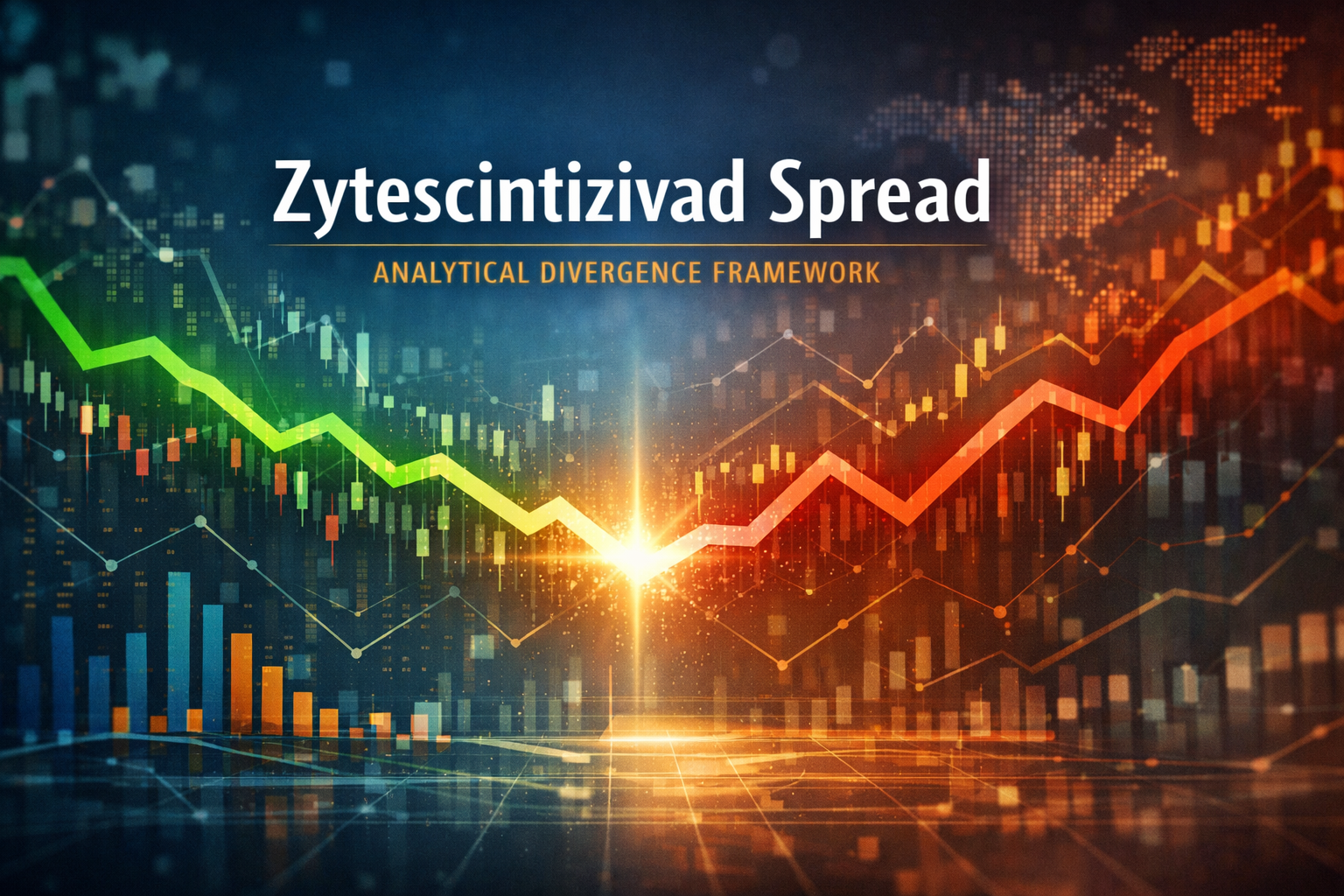
In modern analytical systems, patterns often reveal more than isolated data points. Whether in finance, health modeling, environmental science, or behavioral analytics, the difference between two measurable variables can uncover powerful insights. The concept known as zytescintizivad spread has recently gained attention as a framework used to interpret divergence between correlated indicators. Though not yet mainstream terminology, the zytescintizivad spread represents a structured way of measuring and interpreting the gap between dynamic variables in complex systems.
At its core, the zytescintizivad spread is not merely a difference in numbers. It reflects tension within a system. When two related forces move apart, that movement can signal instability, opportunity, stress, or transformation. Understanding this spread allows analysts and decision-makers to interpret subtle shifts before they become visible disruptions. This article explores the structure, function, interpretation, and real-world relevance of zytescintizivad spread in depth.
What Is zytescintizivad spread
The zytescintizivad spread refers to the measurable divergence between two interconnected performance indicators within a defined system over a specific period of time. Unlike a simple differential calculation, it focuses on contextual meaning rather than numerical distance alone. The spread evaluates how and why the divergence occurs, what forces drive it, and what potential consequences it may carry.
Will You Check This Article: Mark Spaeny: The Visionary Leader Transforming Modern Innovation
The concept typically involves paired metrics that historically move in relative harmony. When those metrics begin to separate beyond expected thresholds, the zytescintizivad spread is said to widen. Conversely, when they realign, the spread narrows. This widening and narrowing behavior provides insight into systemic pressure, imbalance, or emerging transitions.
For example, in economic modeling, it may reflect divergence between productivity growth and wage growth. In operational analytics, it could represent the difference between input costs and output efficiency. In risk assessment environments, the zytescintizivad spread often functions as an early warning mechanism, highlighting shifts that raw numbers alone may not fully communicate.
The distinguishing element of zytescintizivad spread is its interpretive layer. It is not simply about subtraction. It is about understanding what the separation reveals about structural health.
Historical Development of the Concept
The idea behind zytescintizivad spread evolved from comparative modeling techniques used in quantitative research. Analysts recognized that systems rarely collapse without warning. Instead, subtle separations between historically linked indicators begin to emerge long before crisis or transformation becomes obvious.
In earlier frameworks, analysts focused heavily on absolute values. Over time, researchers began studying relational dynamics instead. They observed that when two indicators drift apart consistently, the divergence often reflects hidden friction. This shift in thinking laid the groundwork for the zytescintizivad spread model.
The formalization of the term came from interdisciplinary research combining financial spread analysis, systems engineering, and behavioral modeling. Rather than isolating industries, the framework was designed to be adaptable across sectors. Its strength lies in universality. Wherever two related indicators exist, zytescintizivad spread can potentially be measured.
Structural Components of zytescintizivad spread
To fully understand zytescintizivad spread, one must look at its structural elements. First, there must be two correlated indicators. These indicators need historical linkage or predictive interaction. Without that relationship, divergence holds no interpretive value.
Second, a baseline relationship must be established. This baseline defines what “normal alignment” looks like. It is built from historical data patterns, behavioral consistency, or structural design.
Third, a measurable threshold must be defined. Not every separation constitutes a meaningful zytescintizivad spread. Only deviations beyond expected fluctuation ranges trigger analytical attention.
Finally, contextual interpretation is applied. This step differentiates zytescintizivad spread from basic statistical spreads. Analysts assess whether divergence signals structural strain, emerging opportunity, behavioral shift, or external shock.
Without context, numbers mislead. With context, zytescintizivad spread becomes a strategic insight tool.
Why zytescintizivad spread Matters in Risk Analysis
Risk rarely appears suddenly. It builds quietly beneath surface-level stability. The zytescintizivad spread model is particularly powerful in identifying those early signals.
When divergence widens steadily over time, it may indicate accumulating pressure. For example, if operational expenses rise while productivity growth stagnates, the zytescintizivad spread expands. That widening gap signals inefficiency risk before profitability visibly declines.
Similarly, in macroeconomic contexts, divergence between inflation rates and income growth can expose stress points in consumer resilience. Observing the zytescintizivad spread allows decision-makers to intervene earlier rather than react later.
In high-complexity environments, the spread functions almost like a diagnostic pulse. It does not predict exact outcomes but highlights areas demanding closer evaluation.
Applications Across Industries
The versatility of zytescintizivad spread makes it relevant across multiple sectors. In finance, it is applied to credit risk modeling, investment performance comparison, and liquidity stress testing. Divergence between asset yield and default probability can reveal instability in lending structures.
In healthcare modeling, zytescintizivad spread may track the gap between treatment access and recovery outcomes. When access improves but recovery stagnates, the spread indicates deeper systemic inefficiencies.
In supply chain management, divergence between production capacity and distribution velocity may uncover logistical bottlenecks. Observing the zytescintizivad spread helps managers anticipate shortages or overstock conditions.
Environmental science also benefits from this model. The separation between carbon output and mitigation efforts can reveal policy implementation gaps. When emissions decline slower than sustainability targets advance, the spread exposes execution weakness.
Each field adapts the concept according to its metrics, yet the underlying principle remains constant: meaningful divergence signals hidden structural change.
Analytical Methods Used to Measure zytescintizivad spread
Measuring zytescintizivad spread requires more than basic subtraction. Analysts often combine statistical modeling with trend analysis. Moving averages help determine long-term alignment patterns. Standard deviation thresholds help define abnormal divergence.
Correlation coefficients establish the strength of historical linkage between paired indicators. If correlation weakens significantly while divergence widens, the zytescintizivad spread carries greater significance.
Time-series analysis is especially useful. It reveals whether divergence is temporary noise or sustained structural separation. Short-term spikes may correct quickly, while prolonged widening often signals systemic imbalance.
Visualization tools also assist interpretation. Graphical representation of two moving lines gradually separating provides intuitive clarity. The human eye often detects pattern instability faster than spreadsheets alone.
Common Misinterpretations
One of the most common mistakes is treating every divergence as crisis. Not all zytescintizivad spread expansion reflects danger. Some spreads widen because innovation accelerates one variable faster than another. In such cases, divergence may represent opportunity rather than risk.
Another misunderstanding is ignoring context. Without understanding external influences, analysts may misattribute cause. For example, regulatory changes, seasonal cycles, or technological shifts can temporarily distort indicator alignment.
It is also important not to overreact to short-lived divergence. A meaningful zytescintizivad spread requires persistence beyond expected volatility.
Disciplined interpretation separates valuable signal from background noise.
Strategic Implications for Decision-Makers
For executives, policymakers, and analysts, zytescintizivad spread offers a forward-looking lens. It encourages proactive evaluation rather than reactive correction.
When divergence widens, leaders can investigate root causes before damage escalates. When spread narrows unexpectedly, it may signal restored equilibrium or artificial suppression masking deeper issues.
Integrating zytescintizivad spread analysis into regular reporting systems strengthens strategic awareness. Instead of focusing solely on growth metrics, decision-makers evaluate relational stability.
This relational awareness builds resilience. Organizations that monitor spreads respond faster to structural change and adapt with greater precision.
Limitations of zytescintizivad spread
Despite its usefulness, zytescintizivad spread is not infallible. It depends heavily on quality data. Poor measurement distorts interpretation. If baseline relationships are inaccurately defined, spread analysis loses reliability.
Additionally, some systems contain too many variables for clean pairing. Oversimplifying complex networks into two-variable spreads may overlook deeper interactions.
Finally, the model requires disciplined contextual judgment. Numbers alone do not explain causation. Human interpretation remains essential.
Recognizing these limitations ensures responsible application.
The Future of zytescintizivad spread Modeling
As analytical systems grow more sophisticated, relational metrics will likely gain greater prominence. The zytescintizivad spread framework aligns with modern emphasis on systems thinking rather than isolated measurement.
Advanced modeling techniques may refine threshold detection, allowing earlier identification of subtle divergence patterns. Integration with predictive modeling could enhance early-warning capabilities.
More importantly, interdisciplinary collaboration will expand the concept’s application. When economists, engineers, healthcare analysts, and environmental researchers share divergence-based frameworks, cross-sector insights become possible.
The future of zytescintizivad spread lies not in narrow specialization but in adaptive versatility.
Conclusion
The zytescintizivad spread represents more than a mathematical gap between two numbers. It is a framework for understanding relational tension within dynamic systems. By analyzing divergence between historically linked indicators, decision-makers gain early insight into imbalance, risk, opportunity, and transformation.
Its power lies in context, discipline, and structured interpretation. Used responsibly, zytescintizivad spread strengthens foresight and resilience across industries. While it requires thoughtful application and reliable data, its value as a relational diagnostic tool is undeniable.
In a world where complexity increases daily, understanding divergence may prove more important than tracking growth alone. Zytescintizivad spread provides that understanding.
FAQs
What makes zytescintizivad spread different from a simple statistical spread?
Zytescintizivad spread includes contextual interpretation of divergence between historically linked indicators, not just numerical difference.
Can zytescintizivad spread predict crises?
It does not predict exact events but can highlight early structural imbalances that may lead to instability.
Is zytescintizivad spread industry-specific?
No, it is adaptable across finance, healthcare, supply chains, environmental modeling, and other analytical fields.
How often should zytescintizivad spread be measured?
It depends on the system, but regular time-series monitoring provides the most reliable insight.
Does every widening zytescintizivad spread indicate risk?
Not necessarily. Some divergence reflects innovation or structural transition rather than instability.
Introduction
The business computing world is no longer a quiet back-office function. It’s the nervous system of modern companies, shaping how decisions get made, how money moves, and how fast organizations can adapt when the market punches back. From cloud platforms to data-driven strategy, computing now determines whether a business scales or stalls. This article breaks down what the business computing world really is, how it evolved, and why understanding it is no longer optional if you want to compete, lead, or even stay relevant. You’ll learn the core components, real-world use cases, common failures, and where things are heading next—without fluff or recycled clichés.


What the Business Computing World Actually Means
The business computing world refers to the technologies, systems, and practices organizations use to run operations, manage information, and make decisions. This includes hardware, software, networks, data systems, and the people who design and manage them. It’s not just “IT.” That outdated label misses the point.
Computing in business exists to reduce friction. Every invoice processed, shipment tracked, or forecast generated is a computing task. When these systems work well, businesses move faster with fewer errors. When they don’t, chaos shows up as delays, bad decisions, and wasted money.
The mistake many leaders make is treating computing as a cost center. In reality, it’s a leverage center. Done right, it multiplies human effort. Done poorly, it quietly drains margins until the company bleeds out.
A Short Evolution of Business Computing
From Mainframes to Distributed Systems
Early business computing lived on massive mainframes locked in climate-controlled rooms. Only specialists touched them. Processing was slow, expensive, and centralized, but it was revolutionary for accounting and payroll.
As personal computers entered offices, computing power spread across departments. This boosted productivity but introduced fragmentation. Data lived in silos, and compatibility became a mess.
The Internet and Networked Enterprises
Networking changed everything. Systems began talking to each other. Supply chains connected digitally. Email replaced memos. Companies started acting like integrated organisms instead of isolated departments.
This shift laid the groundwork for today’s business computing world, where speed and integration matter more than raw processing power.
Core Pillars of the Business Computing World
Hardware Infrastructure
Despite all the talk about software, physical hardware still matters. Servers, employee devices, networking equipment, and storage systems form the backbone of operations. Poor hardware choices create bottlenecks that no clever software can fully fix.
Smart organizations standardize hardware where possible. They plan lifecycle replacements instead of waiting for failures. This reduces downtime and keeps performance predictable.
Software Systems That Run the Business
Software is where most business logic lives. Accounting platforms, customer management systems, project tools, and analytics engines define how work actually gets done.
The key problem isn’t lack of options. It’s excess. Companies often stack overlapping tools without clear ownership. The result is confusion, duplicated data, and rising costs with little added value.
Data as a Strategic Asset
Data is the most abused term in business computing. Collecting data is easy. Using it well is hard. The business computing world treats data as something to be governed, cleaned, and interpreted, not hoarded.
High-performing firms design systems around decision-making. They don’t ask, “What data can we collect?” They ask, “What decision needs to be better?”
Major Platforms Shaping Modern Business Computing
Early in any serious discussion, it helps to understand the major platforms organizations rely on today.
Key Business Computing Platforms
| Platform | Primary Role | Typical Business Use |
| Enterprise Servers | Central processing | Financial systems, internal apps |
| Cloud Platforms | Scalable computing | On-demand workloads, global access |
| Business Software Suites | Process management | Finance, HR, operations |
| Data Platforms | Analysis and reporting | Forecasting, performance tracking |
Major providers like IBM, Microsoft, and Amazon Web Services have shaped how these platforms are delivered, priced, and maintained across industries.
The Business Computing World and Decision-Making
This is where theory meets reality. Computing doesn’t create value by existing. It creates value by improving decisions.
Consider pricing. A retailer adjusting prices weekly based on historical sales will always lose to one adjusting daily using live demand signals. The computing difference isn’t subtle; it’s existential.
Good systems shorten feedback loops. They surface problems early. They let leaders test assumptions with evidence instead of gut feelings. Bad systems bury insights under noise and delay.
If your computing setup can’t answer basic questions quickly, it’s not “good enough.” It’s broken.
Real-World Case: Scaling Without Breaking
A mid-sized logistics firm once handled routing manually using spreadsheets. Growth exposed the limits fast. Errors increased. Customers complained. Margins shrank.
By redesigning their computing approach—integrating routing software, real-time tracking, and automated billing—they didn’t just fix problems. They unlocked scale. Headcount stayed flat while revenue doubled.
This is the business computing world at work. Not flashy. Just brutally effective.
Security and Risk in Business Computing
Every system creates risk. The more connected a company becomes, the more exposed it is.
Security failures in business computing rarely come from Hollywood-style hacks. They come from weak controls, outdated systems, and human shortcuts. Password reuse. Unpatched software. Overly broad access rights.
The fix isn’t paranoia. It’s discipline. Clear ownership. Regular audits. Designing systems so mistakes don’t cascade into disasters.
Security is not a feature you bolt on. It’s a design principle you either respect or pay for later.
Comparing Traditional and Modern Business Computing
| Aspect | Traditional Approach | Modern Approach |
| System Location | On-site only | Hybrid and remote-ready |
| Scalability | Slow and costly | Rapid and flexible |
| Data Access | Restricted | Role-based, real-time |
| Decision Speed | Lagging | Near-instant |
Companies clinging to older models often claim stability. What they really have is inertia.
People: The Most Ignored Component
Technology doesn’t fail alone. People fail with it.
The business computing world depends on users understanding systems well enough to trust them, challenge them, and improve them. Training is often the first thing cut and the last thing replaced.
That’s shortsighted. A powerful system used poorly is worse than a simple system used well. Smart organizations invest in literacy, not just licenses.
Common Myths That Hold Businesses Back
Here are two ideas that deserve to die:
- “We’re not big enough to need serious computing.”
- “Once it’s set up, we’re done.”
Size doesn’t protect you from complexity. Growth exposes it. And computing systems decay if they aren’t actively maintained and questioned.
The business computing world is dynamic. Treating it as static is a strategic error.
Where the Business Computing World Is Heading
Computing is moving closer to the decision-maker. Interfaces are simplifying. Automation is handling routine work. Systems are becoming more predictive instead of reactive.
This doesn’t mean fewer people. It means different roles. Less manual processing. More oversight, judgment, and strategy.
Companies that adapt early will feel like they’re cheating. The rest will blame the market.


Conclusion
The business computing world is not a trend, a department, or a buzzword. It’s the operational reality of modern business. It determines how fast you learn, how well you execute, and how resilient you are under pressure.
Organizations that treat computing as strategic infrastructure gain clarity, speed, and leverage. Those that treat it as background noise accumulate hidden risks and inefficiencies.
The takeaway is simple but uncomfortable: if your systems can’t clearly support better decisions, they’re costing you more than money. Audit them. Question them. Improve them. The business computing world rewards discipline and punishes complacency—every single time.
Frequently Asked Questions (FAQs)
What is meant by the business computing world?
It refers to the full ecosystem of technologies and systems businesses use to operate, manage data, and support decision-making across all functions.
Is business computing only relevant for large companies?
No. Smaller firms often benefit more because smart systems let them scale without proportional increases in cost or staff.
How does business computing affect daily operations?
It shapes how work flows, how quickly issues are identified, and how reliably tasks are completed across departments.
What’s the biggest mistake companies make with business computing?
Treating it as a one-time setup instead of an evolving capability that needs ongoing attention and improvement.
How can a company assess its current computing setup?
By measuring how quickly it can answer critical questions, adapt to change, and recover from errors without chaos.

Zytescintizivad Spread: Emerging Risk Signal Framework

Inside arcarrierpoint net: Jobs, Results & Alerts Guide 2026

suhmoraes706: The Story Behind a Rising Online Presence 2026

Discovering Claire Froggatt: A Journey of Passion, Purpose, and Success

Shivon Zilis Net Worth Revealed — A Deep Dive into Her Financial Success

Melinda Trenchard: The Untold Story of Sir Tom Jones’ Lifelong Partner
-

 Celebrity1 week ago
Carlos Scola Pliego: Life, Work, and Public Curiosity
-

 Tech1 week ago
ClickFor Net: Exploring the Rising Online Platform for Insights and Trends
-
 Tech1 week ago
suhmoraes706: The Story Behind a Rising Online Presence 2026
-
 Blogs1 week ago
Inside arcarrierpoint net: Jobs, Results & Alerts Guide 2026
-

 Celebrity1 week ago
Gian Luca Passi de Preposulo: The Private Life of Jessica Chastain’s Husband
-

 Celebrity1 week ago
Michelle Goeringer: Truth Behind Her Private Life
-

 Tech1 week ago
3160965398: Complete Guide to Understanding This Mysterious Number
-

 Blogs1 week ago
what is qixildtop in cleansing: Myth or Method? DeepAnalysis